
Legal Services Offshore blog
Immigration translation certification trackers with offshore support
Pair source documents, translations, and visible certification details while immigration counsel controls adequacy, relevance, and filing decisions.
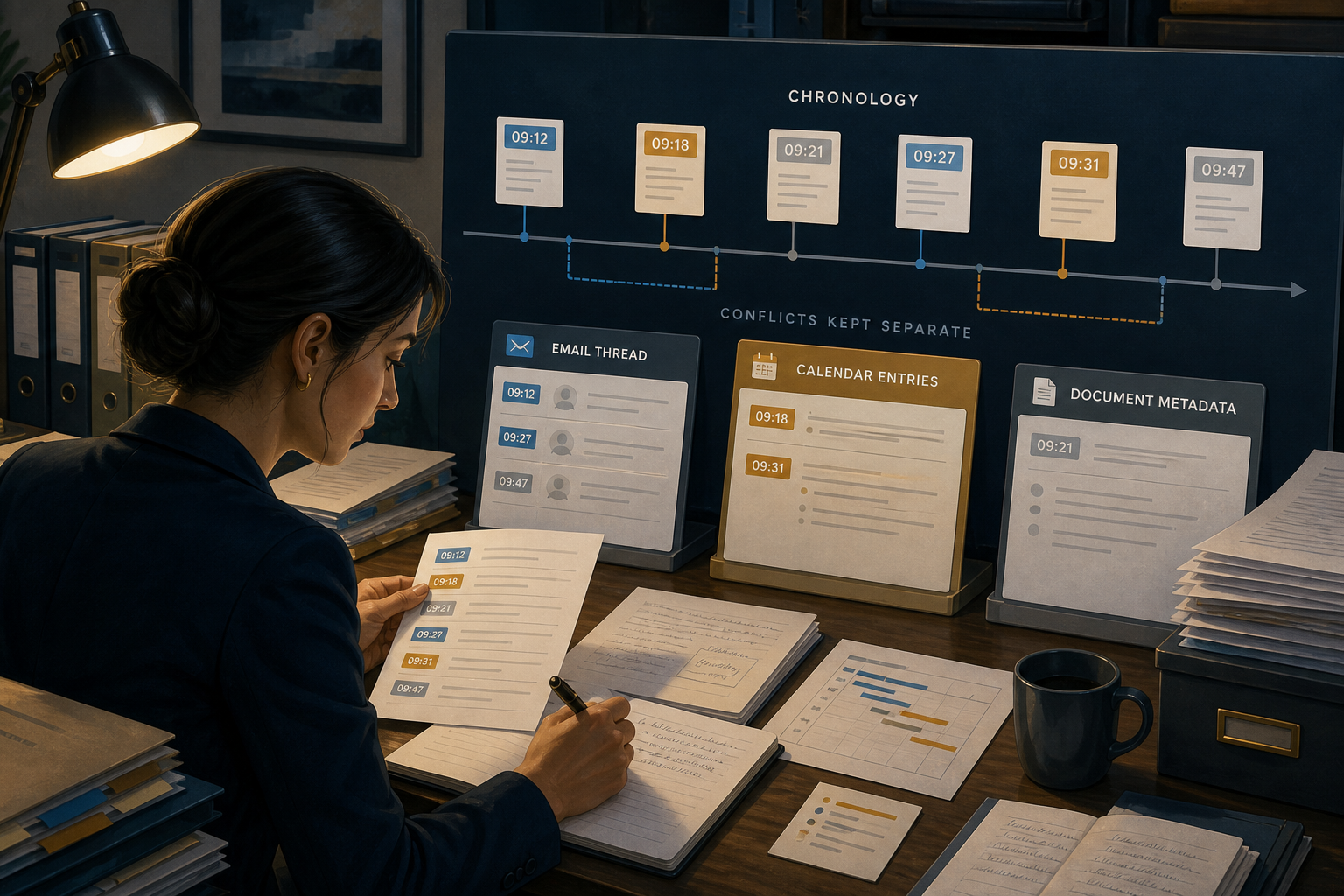
A tracker protects the relationship between files
Immigration teams often receive a source document, one or more translations, and a certification page through different channels. The tracker keeps those records connected. It identifies which translation belongs to which source, what language and identity details are displayed, which pages are included, and what remains uncertain. The support role does not decide whether a translation is legally sufficient, whether a document proves an eligibility fact, or whether it should be filed. Immigration counsel owns those judgments and every communication about the case.
Start with the attorney-approved document list
Counsel should provide the matter identifier, beneficiary or applicant label, approved document categories, source folder, expected language, translation requirements, and reviewer. The worker assigns a stable identifier to each supplied source file before matching anything. Do not search an earlier case for a convenient translation or move a document into scope because its filename appears relevant. If the list expects a birth record and the upload is labeled civil document, keep the supplied label and ask counsel how it should be categorized.
Pair records through evidence, not filename similarity
A reliable pair uses page count, visible names, dates, issuing authority, document number, seals, layout, and an explicit translator reference where available. Record the basis for the match. A translation named final may belong to an earlier scan. If two originals could match one translation, leave the relationship unresolved. The administrator should never rename files in a way that hides uncertainty. Stable source and translation identifiers allow counsel to correct a match without losing the record of what was initially received.
Keep identity variances visible
Suppose a translation spells a surname differently from the passport copy and the certification repeats the translated spelling. Create separate fields for the source-document name, translated name, certification name, and passport name as displayed. Link all four sources and open one identity exception. Do not edit the translation, normalize the spelling, or state that the people are the same. Counsel decides whether the variation needs explanation, correction, another document, or no action. The tracker gives that decision a precise factual starting point.
Record certification details without approving them
Capture whether a certification page is present, the translator name and contact details as displayed, signed status, certification date, stated language pair, competency wording, completeness wording, and the translation identifier it references. Use present, absent, unreadable, or unclear rather than valid or invalid. USCIS publishes general filing guidance about foreign-language documents and translations, but counsel must assess the current instruction, form, venue, and case. The support worker reports the packet's observable features and stops before making an adequacy conclusion.
Treat pages and attachments as a sequence
Count source pages, translation pages, and certification pages separately. Note blank backs, stamps, marginal notes, continuation pages, and attachments when visible. A five-page translation paired to a six-page original needs review even if the missing page looks administrative. Preserve the order received and create a working sequence only under an approved convention. If one certification appears to cover several documents, record the stated scope and linked identifiers. Do not duplicate the certification into separate folders in a way that obscures its original context.
Preserve version lineage after corrections
When a translator sends a corrected file, keep the earlier version, received event, correction message, and new hash or identifier. Link the versions and state what changed only if the difference is mechanically observable. Do not replace the old file or assume that a new version resolves every exception. Counsel may need to understand which version was reviewed, shared, or included in a prior packet. An event-based lineage prevents final filenames from erasing the path through which the case team reached the current record.
Handle sensitive documents with narrow access
Civil records, identity documents, medical records, and family evidence can contain extensive personal information. Give the support worker access only to the assigned matter and approved folders. Use named accounts, approved transfer methods, and secure source links rather than copying values into broad coordination tools. Mask identifiers in training examples. If a file appears to belong to another person or matter, stop viewing it, preserve the access facts, and follow the firm's incident route. Administrative convenience never justifies wider collection or reuse.
Use exceptions that tell the reviewer what is held
Useful exception types include unmatched translation, missing source, missing page, language mismatch, identity variance, unreadable certification, uncertain certification scope, unexpected document, and superseded version. Each exception should cite the relevant identifiers, observed fact, source links, and held packet step. “Translation issue” is not enough. A focused question such as “translated surname differs from source and passport; identity review required before packet assembly” lets counsel act without treating the administrator's observation as a legal conclusion.
Review from both the source and packet sides
First sample source documents and confirm that every page has an attributable translation state. Then sample the proposed filing packet and trace each translation back to its source, certification, received event, and counsel disposition. Check that corrections did not break links and that unresolved items remain visible. Measures can include paired-document rate, unmatched pages, identity variances, certification-detail gaps, reviewer corrections, and reopened packets. Report the eligible population and cutoff; a percentage without those facts can hide missing documents.
Pilot with deliberately imperfect examples
A useful pilot includes one clean pair, one missing page, one identity variation, one shared certification, one corrected translation, and one unrelated upload. The preparer should match only what the evidence supports, apply the right stop rule, and leave counsel with a narrow question. Review the first live batch in full. Expand only when identifiers remain stable, source files stay unchanged, personal information stays within the approved system, and reviewers agree that the tracker exposes uncertainty instead of smoothing it away.
Define an immigration-support role around provenance
For a planning conversation, bring a de-identified source and translation set, attorney document list, expected languages and volume, approved systems, access restrictions, common exceptions, and named immigration reviewer. LegalServicesOffshore.com can use those materials to discuss a bounded role for file pairing, visible-field capture, page reconciliation, certification-detail tracking, version lineage, and exception routing. The firm retains case strategy, translation adequacy decisions, identity analysis, deadline control, client advice, form preparation authority, and filing approval. That boundary keeps the tracker useful and responsible.
Define the translation and certification tracking lane with Immigration Case Administration.
Sources
- U.S. Citizenship and Immigration Services, Tips for Filing Forms by Mail
Consulted for current USCIS filing guidance concerning foreign-language documents and English translations; immigration counsel controls case-specific use.
- American Bar Association, Formal Opinion 08-451
Consulted for supervision, competence, confidentiality, and client communication considerations when legal and nonlegal support is outsourced.
- American Bar Association, Model Rule 5.3
Consulted for lawyer responsibilities concerning nonlawyer assistance.
- NIST Cybersecurity Framework 2.0
Consulted for governance, access protection, detection, response, and recovery controls.